
Clinton County Release Date Meanings
“Projected release date” is a reader’s broad phrase. Michigan OTIS uses more exact labels. PAROLE BOARD JURISDICTION DATE, also described as the earliest release date or ERD, marks when the Board gains legal power to consider parole. MAXIMUM DATE is the potential outer sentence endpoint as calculated. DATE PAROLED is retrospective. It states when a person actually left an MDOC prison on parole.
Scheduled versus actual: ERD is first eligibility, Maximum Date is a possible outer endpoint, and Date Paroled records actual prison exit on parole. None should be relabeled as a guaranteed appointment.
A pretrial Clinton County detainee generally has no sentence-based date. Bond can authorize release, but jail processing and checks for other holds still occur. A county sentence is calculated under the court commitment by the Sheriff. State prison calculations belong to MDOC. Using an OTIS field for a jail-only case mixes two separate systems.
- Eligibility
- The first point at which the Parole Board may legally consider release.
- Maximum discharge
- The expected sentence endpoint if parole does not occur, subject to a correct calculation.
- Detainer
- A request or legal basis for another authority to take custody.
- Discharge
- The end of legal jurisdiction for a sentence, not always the date of physical exit.
Find Clinton County Projected Release
Start with the authority that has the person. A name missing from Clinton County Jail can mean release, transfer, or another movement. The county line confirms a local custody event. OTIS is the right public system only after an MDOC commitment or for MDOC supervision.
- Decide whether the person is in Clinton County Jail, an MDOC prison, or another authority’s custody.
- For county jail, call 989-403-5090 and ask for current custody, the recorded release date if one exists, and whether departure would be release or transfer.
- Review the court register for bond, judgment, sentence, dismissal, and any later order. Do not treat an order as the exact door-out time.
- For state prison, search OTIS by MDOC number when known, or use name and supported filters.
- On the matching profile, read Status, Location, ERD, Maximum Date, and Date Paroled as distinct fields.
- Recheck near the event and contact the responsible records office when an exact calculation must be documented.
The Clinton County release search provides the wider chain when custody is uncertain. It includes jail confirmation, court disposition, state and federal destination checks, and the focused records-request fallback.
The official OTIS search interface appears below and shows the state fields used to locate the correct profile.
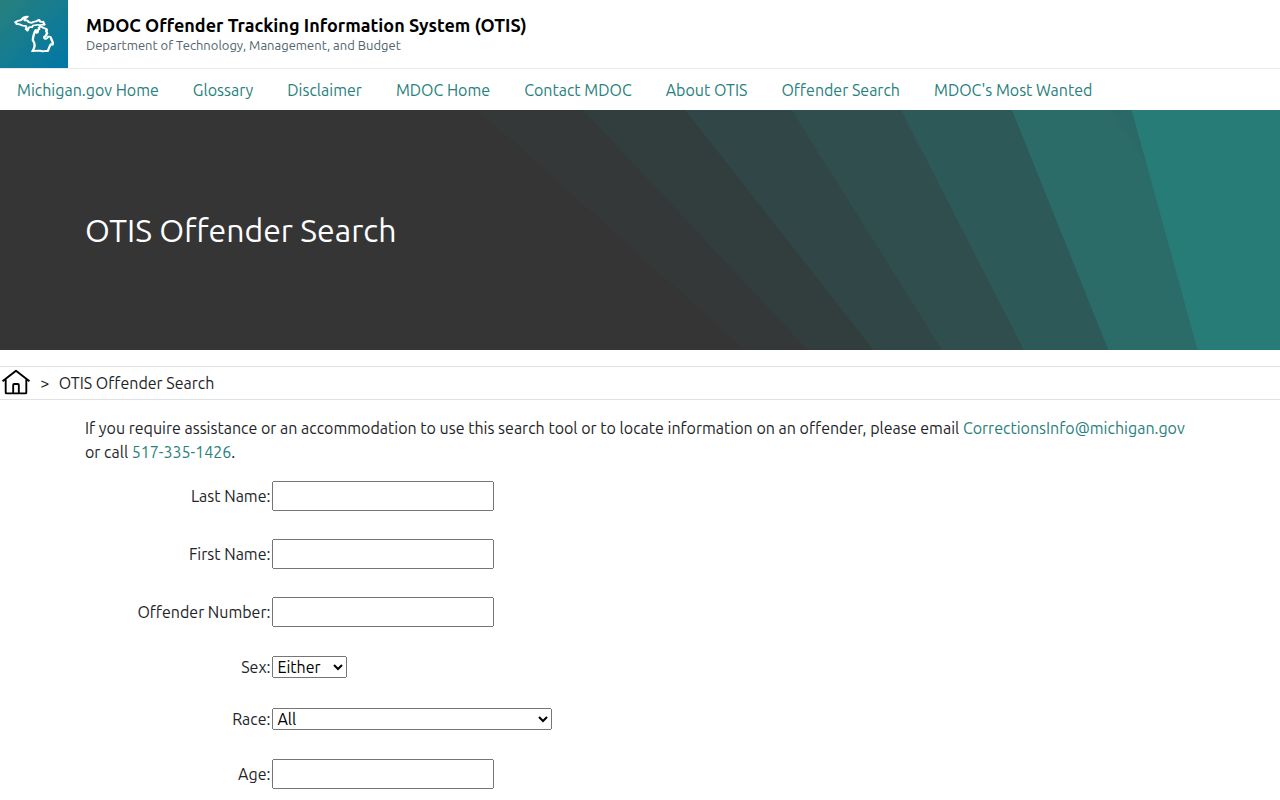
Search filters identify candidates. The projected-release analysis begins only after the correct profile is matched by identifiers and court information.
Read Clinton County Release Fields
Michigan uses indeterminate prison sentences with minimum and maximum terms in many cases. The Board gains jurisdiction after the lawful minimum has been served. It may grant parole then or later if legal and risk standards are met. If parole never occurs, the prisoner generally leaves at maximum discharge, subject to the correct sentence and credit calculation.
| OTIS field | Meaning | What it does not prove |
|---|---|---|
| PAROLE BOARD JURISDICTION DATE / ERD | First legal eligibility for Board consideration | A grant or physical release date |
| MAXIMUM DATE | Potential outer sentence endpoint as calculated | That no correction or new legal event can affect it |
| DATE PAROLED | Actual prison exit on parole | Final discharge from MDOC supervision |
| STATUS | Current reported MDOC condition, such as prison, parole, probation, or discharge | A complete account of unrelated custody |
| LOCATION | Facility or supervision setting tied to the profile | A current home address |
The OTIS status and date definitions are visible in the official capture below.
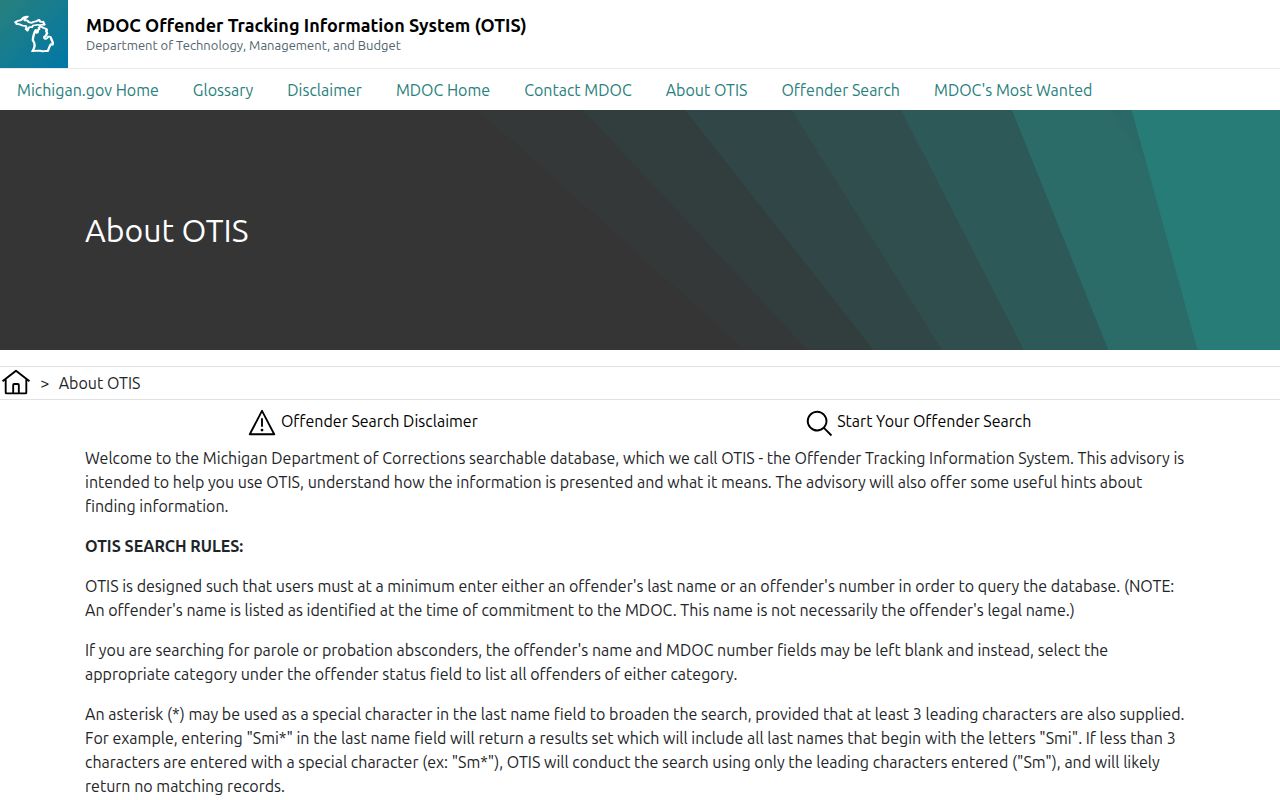
Those definitions prevent a common error: treating first eligibility, a maximum date, and actual parole as interchangeable.
Note: An OTIS profile covers MDOC jurisdiction, not a sentence served only at Clinton County Jail.
Michigan Truth In Sentencing
Michigan truth in sentencing is not a general rule that everyone serves about 85 percent. For covered cohorts, the full judicial minimum must be served in a secure correctional facility before parole consideration. In effect, that is 100 percent of the minimum. MDOC identifies specified assaultive offenses committed on or after December 15, 1998, and other offenses committed on or after December 15, 2000, as covered cohorts without good-time or disciplinary credits against that minimum.
MCL 791.233 restricts parole before service of the minimum, subject to credits that lawfully apply. MCL 791.234 contains special timing for lifers and other categories. MCL 769.34 supplies sentencing context. These rules must be tied to the offense, date, and sentence rather than reduced to an online calculator.
Older offense-date cohorts can remain subject to legally available good-time or disciplinary-credit provisions. MCL 800.33 and MCL 800.34 cannot be converted into one current percentage for all prisoners. Copying an old case’s formula into a new sentence can produce a false date.
Clinton County Parole Timing
Eligibility does not compel a Parole Board grant. The Board applies statutory and risk criteria and may deny parole or set later reconsideration. Even a grant does not create immediate physical release. MDOC’s parole consideration process states that at least 28 days must separate the grant decision from actual release.
During that interval, the Parole Release Unit handles preparation. Placement, notice, detainer checks, record review, and misconduct can affect the next step. Adverse information can suspend a grant. The displayed ERD must therefore be described as first eligibility. The grant is authorization subject to release preparation. Date Paroled later records physical exit.
After prison exit, PAROLE shows continuing MDOC jurisdiction. Only later termination becomes discharge. The Clinton County probation and parole page explains how to distinguish those supervision states.
Why Clinton County Dates Change
A date can move when the legal inputs or custody path change. The reason should be verified through the agency that owns that part of the record.
| Factor | Possible effect | Best source |
|---|---|---|
| Corrected judgment | Changes the sentence data used in calculation | Sentencing court and MDOC Records Office |
| Concurrent or consecutive terms | Changes how multiple sentences combine | Judgment and sentence computation |
| Legacy credits or forfeiture | Can alter an eligible older cohort’s calculation | Applicable statute and records calculation |
| Parole denial | Leaves the person in prison beyond first eligibility | Board action and OTIS |
| Grant suspension | Stops a planned parole after misconduct or adverse information | MDOC release process record |
| Detainer or new matter | Can send the person to another custodian instead of the community | Holding authority and destination system |
| County court order | Can alter bond or a county-jail commitment | Court file and Sheriff calculation |
MDOC policy calls for Records Office review shortly before release. A person comparing an old printout with a current profile should use the latest official record and ask about the reason for a change. OTIS itself warns that dates and status may not be current or complete.
Clinton County Jail Dates
A county-jail sentence follows the court commitment and the Sheriff’s calculation. The official jail operations material publishes no local good-time formula or weekend-release policy. Applying MDOC prison rules to county time would be inaccurate. Obtain the commitment, call the jail, and request the existing calculation record when needed.
The dedicated inmate-information channel is 989-403-5090. Ask whether the person is currently held, whether a release date is recorded, and whether the expected departure is community release or transfer. The broader Sheriff jail-information number is 989-227-6580. A pretrial person’s bond order can explain legal authority, but only the jail can confirm when processing is complete and whether another hold remains.
A focused request under the Clinton County FOIA procedure can seek the existing booking/release record and calculation record for one identified episode. FOIA gives access to existing public records subject to exemptions. It does not require the County to calculate a new projected date or answer a question that is not already recorded.
Clinton County Release To Detainer
Release “to detainer” can end MDOC or county authority while another agency immediately takes custody. The same caution applies to a county warrant, federal matter, other-county hold, or case-specific immigration action. A projected date may be correct for one sentence yet still not be the date of return to the community.
For a transfer from Clinton County Jail to MDOC, OTIS becomes the state navigation layer after processing. For a federal boarder, USMS and the federal court record may be the next source, followed by BOP if the person enters BOP custody. ICE has its own locator for current or recent immigration detention. Record the authority attached to each date.
Confirm Clinton County Actual Release
Near the expected event, recheck the correct agency record. For a state prisoner, Date Paroled is stronger proof of parole exit than ERD or a Board grant. For the county jail, the recorded release date and disposition show whether the local episode ended in bond, court release, sentence completion, or transfer.
VINELink can add a prospective alert, but a notification still needs agency confirmation. The service reports the participating custodian’s event and can lag. A court disposition explains the legal reason while the custody record proves the physical change. Two records from different functions usually provide the clearest answer.
When an OTIS date appears wrong, identify the source of the suspected error. Sentence and conviction data usually begin with the sentencing court, so a correction may require an authoritative court order before MDOC can revise its record. A calculation or current status question belongs with MDOC Records or the listed supervision office. For a jail-only sentence, the Clinton County court commitment and Sheriff calculation control.
Keep the as-of date with any saved result. A later court correction, Board action, detainer, or records review can change the path without making the earlier screen fraudulent. The most reliable conclusion states which date field was shown, which authority owned it, and whether actual release was later confirmed.